

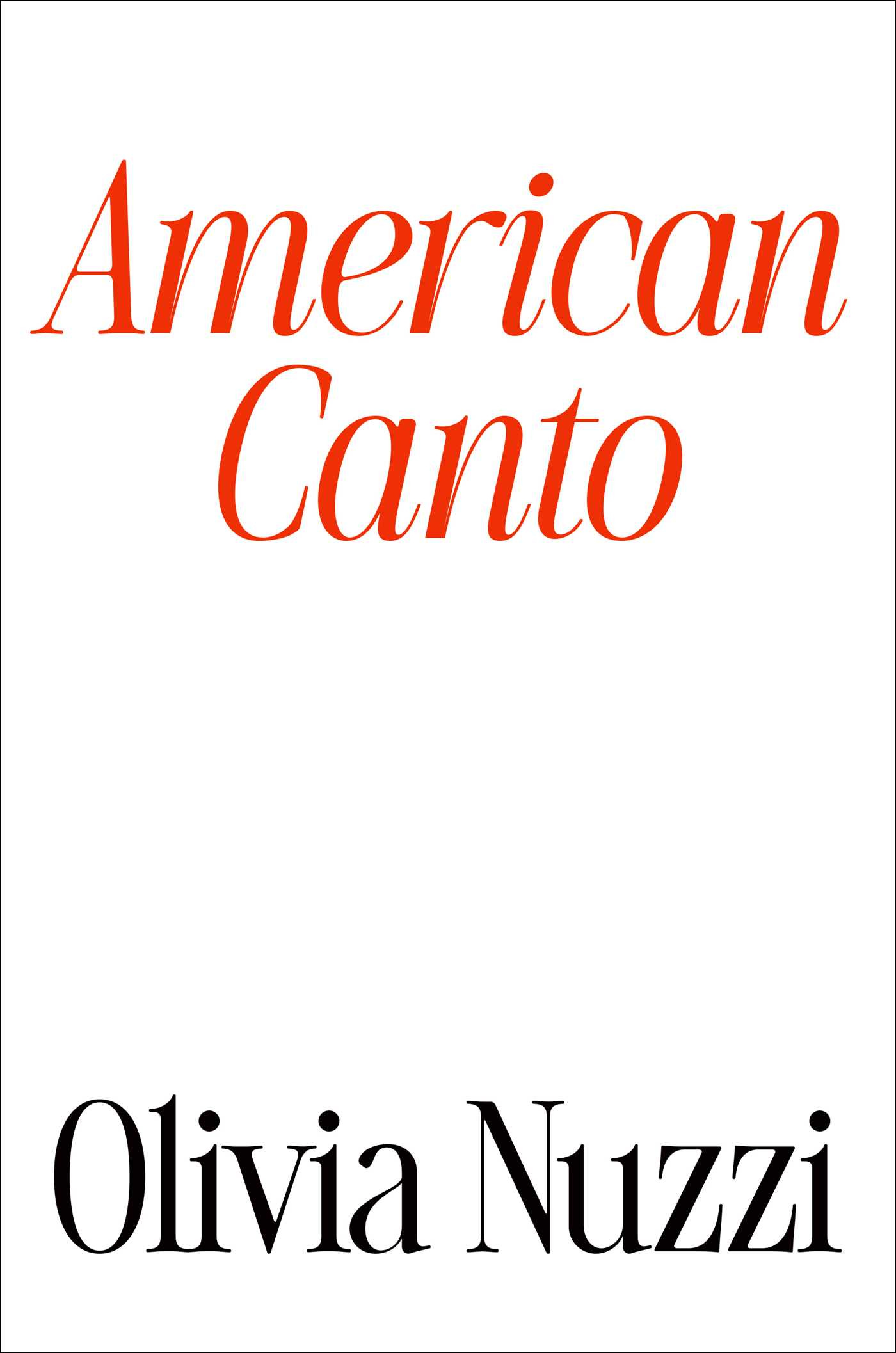
In American Canto, Olivia Nuzzi reveals that New York Magazine, her old employer, offered to keep her on after news broke of her boundary‑crossing relationship with Robert Kennedy Jr. on one condition: she “wrote her way out of the story.” Meaning, if she gave them a tell‑all, she could salvage her career.
She refuses, repulsed by the offer, and opts to take the professional punishment along with the public shame.
That fallout sent her through the fire. She emerges in Los Angeles among the flames of 2025’s Southern California conflagration with her brand-new tome.
In it we find out: she still doesn’t want to write a tell-all.
She tells a version of the story. How she fell in love and the hours‑long phone calls that defined their infatuation. The musings of what their baby would look like. We get a lot of what it feels like to pick up the pieces of your life. And the sting of being left behind when the heat got too hot.
But we do not get the humiliating dirty details. The kinks of the current Secretary of Health and Human Services. A view of Kennedy’s wife only a mistress would be entrusted with. Political opinions that could even now roil the current administration. Not even the rage of a lover scorned.
It’s understandable, on a human level. But it’s frustrating as a fan of Nuzzi’s writing which I would define as having a forensic attention to detail. Long pauses. Saliva in the corner of a mouth. A thousand‑yard stare. She became the best in the political feature writing game by telling a story from the smallest moment, the micro becoming macro.
But it’s very hard to put that level of scrutiny on your own life. Especially when you’re still mad at the world for changing your life overnight.
Canto reveals Nuzzi now enforces a hard line between personal and public. Maybe that line always existed and nobody cared. But now, after the public reaction to her scandal, when tens of thousands crossed it without her having control: she has closed the border.
There is obviously a portion of this that is laughable turnabout for someone who made a career chronicling political figures, often in unflattering moments.
Nuzzi now cherishing privacy is human, if hypocritical. She acknowledges this without apology.
And yet still... we’d love some details. Even if they were only from her perspective.
Take one of the most explosive rumors around the relationship that brought all this to a head: that her relationship with RFK Jr. became public because “the politician” showed nude photos of her to people he knew. People in the upper echelons of New York City society. People who eventually tipped off her boss at New York Magazine.
It’s a sharp, simple image from the outside: an older man coaxing a younger girl into a relationship, then humiliating her to impress his real friends. Does she view it like that? Differently? Does she believe it happened? If not, it is just an invented detail too lurid to not be thought real?
We get no confirmation, no processing, not even a direct mention. Aside from an interview with an “Unidentified Male” about his sexting scandal and a few vague references to people looking at her as if they’d seen her naked… nothing.
It’s past the border and we are not welcome.
The book is filled with meta‑analysis of two subjects: Trump’s America and Olivia Nuzzi.
The Trump stuff is tedious. It’s been written a million times by worse writers and it is not her best work although there are some fun nuggets to be found.
The introspection is far more interesting and far more frustrating. You’re constantly left wondering how honest she’s being, both with the reader and with herself.
The clearest example: her recurring valorization of her father, a decent man by all accounts.
But anyone familiar with her now, all-too-public dating history (which includes multiple men decades older than her) can be forgiven for asking the question:
Does she have daddy issues?
And it’s not just the reader asking, even her brother puts the question directly to her in one vignette.
Her answer is a firm “no.”
Yet the author recounts how she cried during an interview when fathers were discussed. Even though RFK Jr.’s hands reminded her of her father’s hands. Even though RFK Jr. survived an abusive relationship, just as her father survived one with her mother.
It’s one of many contradictions. Either she’s a woman in crisis listing facts she doesn’t yet realize contradict each other or she’s a skilled writer winking at readers.
Either way, I liked those parts. I don’t know if she knows. They felt real.
I hope Olivia Nuzzi finds peace. I hope she keeps writing. Ideally in that order.
But while she protects her borders, she increases the value of everything beyond them. And one man has found a lucrative business extracting that value: her ex‑fiancé Ryan Lizza.
His Substack posts are grimy, personal, and exactly the kind of thing readers might have expected from American Canto.
He spills stories about her relationship with a cantankerous television anchor and her affair with an already scandal‑famous politician. Do we know any of it is true? No. But Nuzzi’s refusal to play the game leaves him the sole black‑market merchant of her private life.
It’s an ugly business. Uglier still in the ruins of old media, where a captured audience is a relic and embarrassment is currency. Semafor hailed his 724,000 views as “a massive number in the post‑traffic era.”
I assumed Lizza’s white‑hot rage would eventually lead to him writing about the scandal from his perspective. He was publicly cuckolded. Human drama like that demands a paywall.
And sure enough, his willingness to weaponize his own humiliation paid off. Not only in a robust subscriber base but in his damage to his enemy. He siphoned attention from Nuzzi’s old media book rollout. Her New York Times feature, her Vanity Fair excerpt.
A glamorous black and white reemergence blanketed by her own dirty laundry.
Nuzzi had been hired as the West Coast editor for Vanity Fair. Lizza’s posts made sure to highlight every accusation that might poison her credibility.
And on Friday, she was out of the job.
During an interview last week, Nuzzi joked her press tour was going so poorly her agent sent her an unsolicited “I love you” text and Monica Lewinsky had been checking in on her.
Lizza had the goods, Lizza had the speed.
The prestige that came with the rollout couldn’t compete in the “Post-Traffic Era.”
Lizza hit the gas. Nuzzi got run over.
Being as bloodthirsty as the next gossip monger I want Olivia to fight fire with fire. To unleash every humiliating peccadillo about her ex‑fiancé. Turnabout is fair play. My credit card bill has room for another Substack subscription.
Maybe she will.
But Canto suggests she won’t.
A friend once told me during a brainstorm, you need dignity in what you offer the public. A moral framework. I always countered: sure, but we need attention.
He’d joke, “You can get attention by posting naked pictures of your sister. Doesn’t mean you should.”
The strangest night of my political career was in South Carolina in 2020, when Tom Steyer held an event with Juvenile. Back That Azz Up in a tiny Columbia gym and a ivory-white presidential candidate pretending to know why the majority‑Black audience was so excited.
It went viral immediately.
I’d been on the road covering the Democratic primary, fulfilling a deal with my audience: if they subscribed, I’d put my journalism degree to work and travel like a real reporter.
It worked.
I booked a ticket to Iowa and soon found myself in press pens with people I’d followed on Twitter for years. But something became clear fast: the light went out of people’s eyes the moment they realized I was “just a podcaster.” Even worse, one they hadn’t heard of.
One person, Dan Newhauser, was friendly. I met him at a bar in New Hampshire at the time he worked for Vice. We went to the Steyer event together. Afterward, he invited me to join Olivia Nuzzi and Ryan Lizza for drinks.
I was nervous. But both were kind. Curious that I’d funded my own way onto the trail. I immediately understood why Lizza excelled at access journalism and why politician after politician trusted Nuzzi to cover them even if the final products were never puff pieces.
Before a few months ago, it was just a quirky footnote to a bizarre political night that included Steyer’s wife undulating next to Mannie Fresh.
I saw them several times after that in press pens around the country. Always warm, always friendly.
I always appreciated it.
Despite finding this topic endlessly fascinating, I haven’t mentioned it much on the podcast or on social media because these people are real enough to me that it seemed intrusive.
Watching their relationship and careers careen, explode, and then re‑rack for another go-round has been surreal.
But in this world attention is the coin of the realm and everyone could use more of it.
I hope they both keep writing.
Preferably about things other than themselves and each other.